Showing posts with label turkey. Show all posts

Tuesday, November 24, 2009

The Divine Secrets of the Gumbo Brotherhood - Apologies to Sandra Bullock, Charlize Theron, et al.

Gumbo! I wrote a post previously about jambalaya, but this time we're going to tackle gumbo - just in time for the annual chant of, "What the hell do I do with this turkey carcass?"

So, what IS gumbo? Well, it's soup, basically. Or is it stew? Or is it chowder? Or is it all of the above? The answer? Yes.

What it is not is that crap you get in a can from Campbell's, with the rice swimming in the broth, which is loaded with tomatoes.

The three keys to gumbo, as with almost all Cajun/Creole dishes, are the Trinity (equal parts of onion, bell pepper and celery - the Cajun version of mirepoix), the stock and roux. The Trinity is a simple matter of chopping the vegetables and the stock I've discussed elsewhere, so let's tackle the roux.
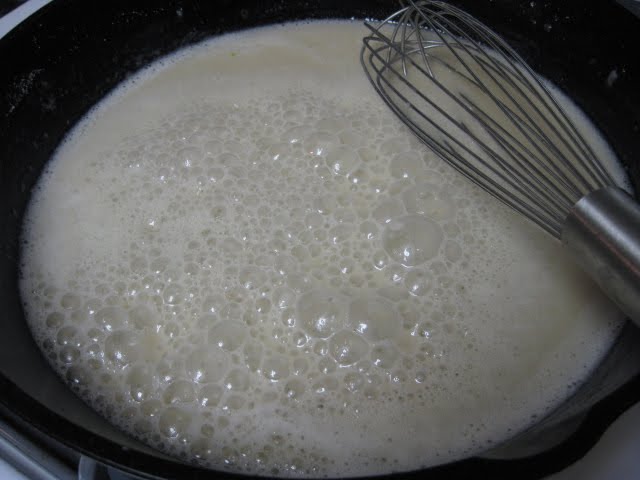

Heat a cup of vegetable oil over medium heat until it's shimmering, preferably in a cast-iron pan as I've done here, but almost any skillet will do as long as it's not thin, stamped steel. Sprinkle a cup of flour into it, whisking constantly. Continue to whisk continuously, and if you're using a non-stick skillet (not really recommended because of the heat and the potential for not only damaging the pan but leaching the chemicals into the roux) use a silicone spatula or whisk instead - as long as it's one that's approved for 600 degrees or above. The roux will change color gradually and you need to pay attention or you'll burn it.

Don't rush, though. This whole process will take 20 to 30 minutes or even longer, so be patient. Sure, the real experts can whip up a good roux in a few minutes (I once did it in 5 minutes as a class demo) but there's no point in pushing your luck, and I don't. You'll also want to be very careful about splattering as you whisk or stir. The stuff isn't called Cajun napalm for nothing. If you get it on your skin it will stick and you'll have a second or third degree burn. OUCH!


The first color change will turn the roux from white to a sort of beige color. Next will be something that resembles peanut butter. The picture doesn't really do justice to the color because the light is too intense, but I hope you'll get the idea. After that, the roux will darken and eventually you'll get to the stage where it resembles mahogany - a sort of deep, reddish brown. This is where you really need to pay attention.


This is the mahogany stage. Unfortunately I didn't frame this picture too well. Oops.

The next stage is a deep chocolate color, slightly darker than milk chocolate. When you get close to this stage, IMMEDIATELY turn off the heat, remove the pan from the burner if you're one of the unfortunate souls who's cooking with electricity and dump the Trinity into the pan. The roux will continue to cook and turn darker from the retained heat in the skillet and, if you're using cast iron which retains heat longer, you'll have to add some stock, preferably chilled, otherwise it will burn for certain and you'll have to throw it out and start over. When the mixture has cooled a bit, toss in a couple of cloves of minced garlic and let the whole thing cook for a couple of minutes.


This picture doesn't really show the color, partly because of the lighting and partly because I'd added some stock and diluted the roux. What it does show is the Trinity in the roux.

The next step is to put this mixture into a stock pot or a Dutch oven and add some stock. In this case, I used about a quart of stock with a half recipe of roux and a Trinity made from half a cup each of onion, celery and bell pepper, but only because I didn't want to make a whole batch. Simmer the mixture for two hours, partially covered. It won't be as thick as you might imagine because the dark roux loses its thickening power, but it's not supposed to be thick like library paste, anyway. Many recipes call for okra to be cooked with the stock, roux and Trinity, but I can't stand the stuff, so I don't use it.

After two hours, brown some chicken pieces (I used thighs) that have been seasoned with salt, pepper and cayenne and some andouille (I used about 6 or 8 ounces sliced into 1/2-inch pieces on the bias), then add them to the pot with some dried thyme and a bay leaf or two, and simmer for another hour or more. If you're using leftover turkey (and brown turkey stock you've made from the carcass, remember), just cut it into bite-sized pieces and simmer them. This is a great way to use all those little bits next to the bone that are hard to carve at the Thanksgiving table.


You'll want to be pretty aggressive in skimming the fat off the surface because the chicken (if you're using it) and the andouille will render quite a bit. Refrigerating helps, but the chicken fat won't really congeal like beef or pork fat will, so just work at it a bit. This is what the dish will look like when it's getting close to serving.

At this point, all that's left to do is to remove the chicken from the bone and either cut it into bite-sized pieces or shred it. Of course, if you're using leftover turkey you won't need to do this. Now, if you like, and it depends on my mood, you can add some shelled and de-veined shrimp, cooked crawfish tails or crab meat. Or, if you're fortunate enough to find them, raw crawfish tails. A really rustic gumbo can have blue crabs broken in half, but whatever you do, only add the seafood long enough before serving to either cook it through or heat it if it's already cooked.

Taste the gumbo and adjust the seasoning if necessary, then ladle it into bowls over a mound of cooked, long-grain rice and sprinkle with sliced scallion tops. If you'd like, you can stir in a little file powder to thicken the broth, but I reserve this for gumbo made strictly from seafood - and that's another recipe and another post.


Tonight I'm going to put shrimp in my gumbo, so I'll take a picture when I serve it and post it right here. In the meantime, think about gumbo for Saturday or Sunday this week. You'll be happy.

Laissez les bons temps rouler!

PS - Thanks to Chuck Taggart's The Gumbo Pages, a website that's been a valuable resource for me for several years.

Monday, November 2, 2009

Hate marshmallows? A cure for the Thanksgiving side dish blues!

There are some things about Thanksgiving I just dread. The vile green bean casserole with the canned mushroom soup and canned fried onions is bad enough. So is the ubiquitous lime Jell-O mold. But one thing I just can't abide is marshmallows on the sweet potatoes, so I'm going to offer up an alternative. Chipotle sweet potatoes.

I know, the dish you're used to is generally referred to as candied yams, but I'm assured that yams and sweet potatoes are related to each other in much the same way that an armadillo is related to a giraffe. What you get in the can from the supermarket, though it may be labeled as yams, is actually sweet potatoes. Since I have an aversion to almost all canned food with the exception of tomatoes and tuna, I'm going to suggest you use fresh ones.


Basically, you have two choices. You can make a "mashed" dish or something similar to a gratin. Either dish starts with the same thing, canned chipotles en adobo pureed with milk, half and half or cream. It's your call depending upon your waistline's tolerance level for butterfat.

The key here is to truly puree them, not chop them. A blender (either the upright type or an immersion blender) or a small food processor is a must here. I'm pretty good with a knife, but the one time I tried mincing them very fine I almost killed someone who didn't have much of a tolerance for heat when she got a small chunk of chipotle stuck in her throat for a bit - until she could wash it down with some water. Trust me and use a blender. If you don't have one, Amazon (shameless plug, here) is running a special on the Cuisinart immersion blender and the ad is in the "Deals" section in the sidebar of this blog. It's a great tool, especially if you like to make soup. Okay, the blatant attempt at generating ad revenue from Amazon is over. Back to the recipe.

How many chipotles? I can't tell you. They're all a bit different in heat like all chiles, and it depends on the tolerance levels of your guests and how many people you're serving (and, naturally, how many sweet potatoes you're cooking as a result). Start with one or two along with some of the sauce from the can to a cup or so of dairy product and taste the result. You can always add more. And don't forget - wash your hands after you've handled any chile, preferably 2 or 3 times.

If you're making the "gratin", peel and slice raw sweet potatoes and layer them in a baking dish, salting and peppering as you go along. Add some of some of the chipotle mixture - to which you've added some honey (not much - maybe a tablespoon for every sweet potato, but trust your personal taste) which cuts the slight bitterness of the chipotles - after every layer. Dot the top with butter and bake, covered with foil, at 350 until the potatoes are tender.

If you're making the "mash", poke a few holes in the sweet potatoes as you would if you were baking a russet and bake in a shallow pan (they tend to ooze all over the oven floor if you put them directly on the rack) at 350 until they're soft, then scoop the flesh from the skin. Season with salt and pepper, add a big lump of butter and some chipotle/milk/honey mixture and stir. There's no mashing involved.

If you don't have any honey you can use brown sugar or maple syrup (the real kind, not something with butter flavor in it), but the whole point of the honey is to get away from the cloying, brown sugar-laden and overly sweet traditional dish. Along with the cranberries, this is one of the reasons it's so difficult to match wines to the traditional Thanksgiving meal.

Enjoy, don't over-eat, and may your bird be nicely browned.